Government “Solutions”

I don’t adhere to the philosophy that government is evil. Rather, I believe it is established by God to accomplish justice. As stated in the book of Romans in the New Testament, it should protect those who do good and punish those who do evil. When government stays within its God-ordained role, it is honorable and necessary.

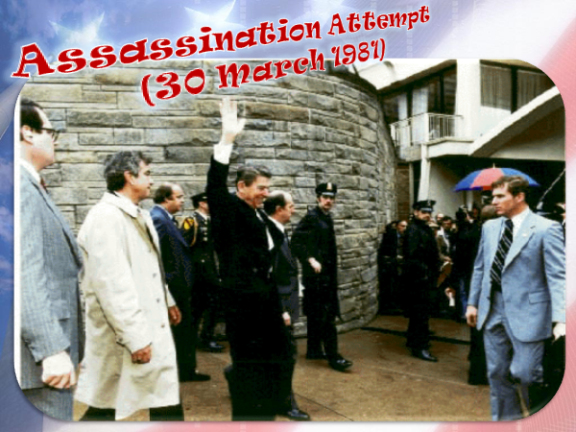
But when government steps outside those boundaries, it creates unceasing mischief. When Reagan took office, in his first inaugural address, he famously noted that in the circumstances he faced at that time, government was not the solution but the problem.

That’s where we are again.

Ever since Reagan left office, we’ve allowed a steady drift toward government solutions for everything. That drift has escalated into a race during the Obama years. Here are a couple of government “solutions” we now have to deal with:

Isn’t it just grand that we no longer have a choice for the type of light bulb we want to buy? And these new, supposedly highly efficient, “green” bulbs, if they should ever break, are more of an environmental hazard than anything produced by private industry in the past 150 years. Note also the official name of Obamacare: the Affordable Care Act. See the price tag? Let’s see now, what were we promised at the beginning?

The scariest thing is that there were people who actually believed that. The costs of the act were generally put off until after the 2012 election, and the desirable features came first, but the hard reality will soon hit everyone.

Remarkably, despite the best efforts of the Obama administration to kill the economy, it still shows signs of life. Wherever the free market can see cracks in the stifling government net of regulation, it will insert itself and continue to prosper. But will voters really understand the nature of any recovery that we see? You can be sure the president will try to spin any sign of economic life to his advantage:

Will the electorate buy into the big lie again?

Reagan, Santorum, & the Nervous Nellies

Listening to the panic within the GOP establishment about the possibility of Rick Santorum being the Republican presidential nominee reminds me of 1976 and 1980. The criticisms I hear today of Santorum by GOP insiders are similar to the ones leveled against the “outsider” back in those earlier presidential campaigns. The outsider at that time was a guy named Ronald Reagan.

I remember clearly how adamant his Republican critics were that it would be an embarrassment to have Reagan at the head of the ticket: he was a grade-B movie actor, we were told; he had a tendency to say foolish things; he was too focused on the problems and didn’t have a “sunny” enough disposition. Can you believe that last one, now that everyone points to Reagan’s optimism? But back in the day, he was the one who came across to some as too hardline—he would turn off the moderate voters.

As today, we were gravely informed that disaster would befall the GOP if Reagan were the candidate. So, in 1976, the GOP establishment lined up behind Gerald Ford. Of course, he was the sitting president, so much of that was to be expected. But the venom directed at Reagan was unceasing. In particular, we were assured that a prolonged primary season, one that lasted right up to the convention itself, would destroy any chance Ford would have against Carter. It did go to the convention, and Reagan only barely lost the nomination. While it’s true that Ford lost to Carter, blaming Reagan for that would be to omit how badly Ford performed as the candidate. It also would dismiss the effects of Watergate and Ford’s pardon of Nixon. No, Reagan’s challenge was not the reason Ford lost; he accomplished that all by himself.

Again, in 1980, the Nervous Nellies of the squishy middle wanted someone else besides Reagan, whether it was Bob Dole, Howard Baker, or George H. W. Bush. We were gravely informed once again that a Reagan candidacy would be a disaster because he couldn’t draw in the independent voters. The economy at the time was eerily similar to what it is today. There was a weak incumbent—Carter—just like there is today with Obama. Yet the polls still predicted a Carter victory right up to the week before the election. Imagine all the “I told you so’s” being whispered among the Republican moderates. Well, that election was a blowout for Reagan. The rest is history.

That’s why I’m not swayed by our current crop of Nervous Nellies. They’ve been wrong before; they can be wrong again. What we need is someone who stands for genuine Biblical principles in government—no, that’s not a theocracy—and who’s willing to take on the incumbent philosophically as well as on specific policy issues. We need someone who can explain “why” we need to change our perception of government, not merely tell us “what” he’s going to do. Reagan was good at the “why” as well as the “what.” Santorum deals with foundational thinking, whereas Romney doesn’t seem to have a foundation.

By the way, do you recall that Romney won Michigan this week? Well, you recalled incorrectly. It turns out that the delegates are split 50/50 between Romney and Santorum. In most worlds, that’s called a tie. This isn’t over yet.

The Game Truly Is On Now

“Game on” was how Rick Santorum described the status of the Republican presidential primary race the night he won Iowa [even though he didn't know he had won it for another week]. Well, if that win was a signal that the game was on, last night served as an indication this is a serious game for sure. Polls had hinted he might take Missouri, eke out a slight win in Minnesota, and could be encouraged by a strong second-place finish in Colorado. After the votes were counted, he had swamped Romney in Missouri, scored a solid victory in Minnesota, and stunned all pundits by taking Colorado by five points.

Santorum had a perfect three-for-three evening.

Despite the expected caveats—Missouri was just a “beauty contest,” none of those states actually awarded delegates at this point, turnout wasn’t that high—the results have changed the trajectory of this “game.”

What are we witnessing? First, Romney has never nailed down the conservative vote, and it showed in a big way. Second, Gingrich may have already peaked and is now beginning a fade because conservative voters are switching allegiances; when they compare Gingrich with Santorum, they are liking Santorum better. Third, this obviously is no longer a two-man race. Fourth, lots of money and organization may not trump issues after all. And how about this possibility: should Gingrich now leave the race so he won’t drain support from Santorum? How’s that for turnabout?

I’ve always despised the mantra that whoever wins early is the presumptive nominee. I recall another primary battle back in 1976, when an upstart challenger named Ronald Reagan took on the incumbent president Gerald Ford. Reagan lost one primary after another, and the experts were saying he should pull out. Then the tides shifted, and he began winning them all. The race was so close it wasn’t finally settled until the Republican convention that year. Yes, Reagan fell short, but I doubt that anyone today seriously thinks anymore that Ford was the better candidate. So I say, let the race continue.

Santorum is correct when he says that Romney cannot be the Republican spokesman to critique Obamacare, given his background and ongoing defense of Romneycare. Santorum also is someone who can put those midwestern states in the Republican column in November. I’m also convinced he will be the best person to tackle the looming Iranian threat.

Romney last night in his speech said, “This is a time for real change in Washington—fundamental, bold, dramatic change.” I couldn’t agree more. But when has Romney ever been the candidate espousing fundamental, bold, or dramatic change? He’s the mushy middle who will superintend the status quo. I can’t imagine him doing anything bold. He’s always been the “go along to get along” guy. Santorum, on the other hand, has been rock solid on issues dear to my vote—sanctity of life, significance of family, and Biblical morality as the cornerstone of policy.

Santorum has passed one test. Now, can he do the same in Arizona and Michigan at the end of this month? Michigan is another of Romney’s “home” states—he seems to have a number of those. Yet Santorum’s message of reviving manufacturing could play well there. Arizona is quite conservative, and the ongoing battle that state has with Obama over illegal immigration may also be fertile ground for him.

I think he was correct to say “game on” in Iowa. That terminology is even more appropriate now.

Whittaker Chambers: The Movie

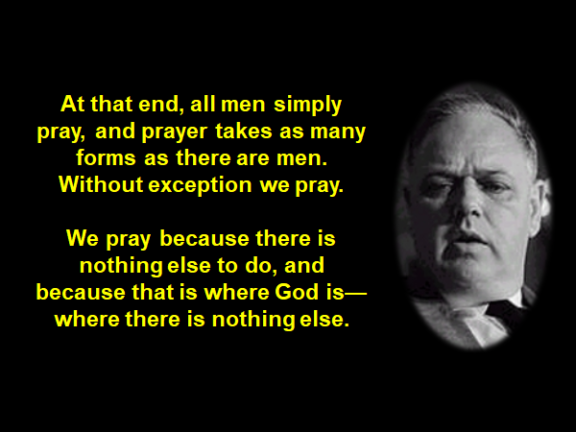
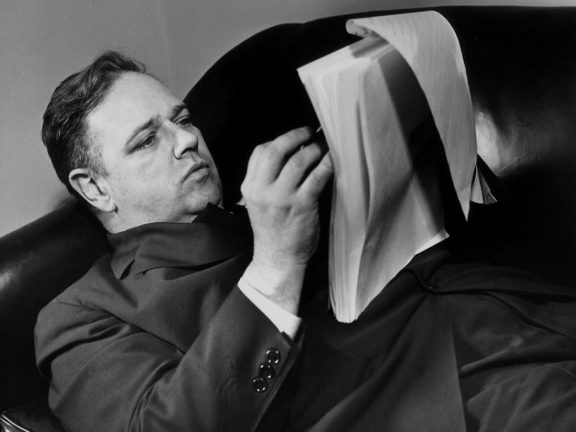
For years, I have commented to as many people as I could that a movie needed to be made of the life of Whittaker Chambers. His story is one so dramatic, so significant historically, and so grounded in spiritual reality that it begs to be told.

Of course, he already has told it in his magisterial autobiography Witness. Clearly one of the seminal books of the twentieth century, it reveals the inner struggle of a man who grew up in a terrible family situation, gave himself over to the revolutionary communist faith, worked in the communist underground to undermine America’s government … then break from that faith to turn to God, where he found ultimate meaning for his life.

He then, in a real sense, gave his life to try to save America from the hidden enemy that wanted to destroy it. His “witness” to the Congress about what he knew of that underground, and the controversy over the role of Alger Hiss as one of his communist compatriots, became front-page news from 1948-1950.

Witness emerged in 1952 and raced to the top of the bestseller list. Yet so few know anything about Whittaker Chambers today.

I, however, have been so fascinated by his tale that I have a full semester course I teach on him and his wonderful book. I’ve also completed a book manuscript that will be published later this year that showcases the similarities and differences between Chambers and Ronald Reagan. The title will be The Witness and the President: Whittaker Chambers, Ronald Reagan, and the Future of Freedom. I’ll let you know when that’s available.

But the reason for this post today is that I discovered there are now seasoned professional filmmakers who are serious about chronicling Chambers’s life and his contribution to the soul of the nation. They need the financial wherewithal to make the film a reality and are seeking to find other interested individuals who can contribute to ensuring this production sees the light of day.

I urge you to visit the website that describes the vision for the film and to prayerfully consider helping with the costs of production. To view the site, just click here.

We are a largely superficial people who don’t think deeply about life and the consequences of our actions. This movie can be one important corrective to our societal malady. Please give it your support.

The Santorum Surprise

Eight votes. That’s all that separated Mitt Romney and Rick Santorum once the Iowa caucuses ended. Technically, Romney was the winner, but one has to excuse Santorum for feeling as if he took the prize. Two weeks ago, no one saw this in the making; one week ago, though polls showed a Santorum surge, few could have guessed it would turn out this way.

Even the speeches given by both at the end of a long night marked the contrast: Santorum’s was, as many have commented, inspiring and from the heart, while Romney’s was a rehash of campaign rhetoric. Another factor that impressed me was the way Santorum identified with blue-collar workers because that was his family’s background. The story of his grandfather was Reaganesque, and while nearly every candidate has taken it upon himself or herself to embrace the Reagan mantle, Santorum has come closest to the actual spirit of the 40th president. One of the keys to Reagan’s success was his ability to relate to the so-called “common man.” If Santorum can do the same, he may continue to surprise.

What does this mean for him going forward? The climb to the nomination will be steep regardless of the Iowa infusion of adrenaline. New Hampshire, the first primary state, is Romney territory. Can Santorum build on his momentum and carve out a niche there large enough to keep the buzz alive? It’s then on to South Carolina, whose primary voters are more like Iowa’s than New Hampshire’s. Can he pull out a clear-cut victory in the Palmetto State?

One positive factor for him is the withdrawal of Michele Bachmann from the race. The most conservative candidates—Santorum, Bachmann, and Perry—have split the conservative vote. Now that she is no longer on the ballot, that could help Santorum. Although her numbers were not high in either New Hampshire or South Carolina, even a few more percentage points could make the difference. If Santorum had Bachmann’s 5% in Iowa, he would have run away with the top spot.

It looked like Perry was going to drop out as well, only to surprise even his own team by deciding to move on to South Carolina. That’s too bad. I like Perry, but he has no real chance at getting the nomination. His only contribution now will be to draw votes from Santorum, thereby giving Romney a greater opportunity to stay at the top.

The case with Gingrich is somewhat more complex. He is angry, and that anger is directed at Romney. He already has a full-page ad running in New Hampshire newspapers contrasting his conservatism with Romney’s moderate stance. He’s fighting back. That could re-energize his campaign, which might lower Romney’s numbers, yet it also could detract from Santorum’s, thereby creating a wash and maintaining the status quo.

Ron Paul, meanwhile, by coming in third, will put the best face on the result, but has to be disappointed. So many of the polls had him number one; perhaps his foreign policy views finally caught up with him. As I’ve said before, I wouldn’t feel safe with Paul as commander-in-chief. He doesn’t really grasp the dangers we face from radical Islam. Let’s be honest: he’s more of a libertarian than a Republican. Iowa was his best shot; it will be downhill from this point for him. It’s time to pack it in and reject calls for a third-party candidacy that can only end in the reelection of Obama.

No matter what happens in New Hampshire, the race will not be decided there. Neither do I think South Carolina will serve that purpose. As a Floridian, I’m glad I will be able to participate in a primary with significance later this month. The media may want to call this for Romney at every point along the way, but that will be premature. Keep watching for surprises. I have this feeling there are more in the offing.

Chambers, Reagan, & the Spiritual Crisis

I finished another semester last Friday. The goal of my teaching is always to point students to Biblical truth; history is the vehicle. At the end of my course covering the second half of American history—after I’ve spent weeks showcasing the loss of Biblical principles in America over the last century or so—I like to close the course with a couple of quotes from those who clearly witnessed this loss and sought to reverse it.

Whittaker Chambers and Ronald Reagan are two bright lights in a sea of political manipulation and a spreading humanistic worldview. They spoke eloquently about the need to return to the basic truths.

Chambers, in his magisterial autobiography Witness, offered a combination of affirmation and warning when he wrote,

External freedom is only an aspect of interior freedom. Political freedom, as the Western world has known it, is only a political reading of the Bible. Religion and freedom are indivisible. …

There has never been a society or a nation without God. But history is cluttered with the wreckage of nations that became indifferent to God, and died.

That last sentence is a chilling perspective, but I believe it is accurate. Chambers’s clarion call was to recognize the centrality of God in society, and to realize that indifference to spiritual truth will kill any society.

Reagan was roundly criticized when he called the Soviet Union the “Evil Empire.” Yet his description was correct. He worked hard to build the American military again after it fell into political disfavor through the Vietnam tragedy, but in that so-called “Evil Empire” speech, he constantly returned to a spiritual theme, earnestly hoping that those who live in darkness might find true life in the Lord. One of his key lines was the following:

While America’s military strength is important … I’ve always maintained that the struggle now going on for the world will never be decided by bombs or rockets, by armies or military might. The real crisis we face today is a spiritual one; at root, it is a test of moral will and faith.

I like to use these quotes at the end of the course to remind students that the only path out of any manifestation of spiritual darkness is to shine the light of Biblical truth. My job is to plant the seeds; God causes the seeds to sprout and grow into viable fruit.

Chambers and Reagan also happen to be the subjects of my new book being published next year. My hope is that it too will be a seed that God can use to help turn back the tide of unbelief. We are a nation on the brink of complete disintegration if we don’t change the foundations upon which we are now building. Yet where God is, and where His people, no matter how small a remnant, stay faithful, there is always the possibility that real change can occur.

Keep the faith.

Help for Your Christmas Shopping

I know you’re Christmas shopping, so please indulge a little shameless self-promotion. Actually, I’m promoting ideas, not myself; it just happens that I wrote down the ideas, that’s all. May I interest you in a few books?

If you know someone who needs to think through how Biblical principles apply to civil government, you might consider sending them If the Foundations Are Destroyed. In it, I outline seven basic principles through which we can gain perspective on basic truths God has established. The applications are both personal and governmental. Each chapter begins with a Scriptural overview of a principle, followed by how that principle has been obeyed or ignored in history, with the resultant consequences. I don’t claim this is the final word on what those principles are, but I do believe it’s a good introduction to thinking Biblically.

If you’re more oriented toward a biography, particularly of a man who made a significant impact on early America, you might want to check out Defining Noah Webster: A Spiritual Biography. Webster earned the title of Schoolmaster to America for his famous speller, his other various textbooks, and his monumental dictionary. Key to understanding Webster is the conversion he experienced at age fifty. From that point on, everything he wrote exhibited his solid Christian faith. Even his dictionary was an instrument for advancing knowledge of God and His ways. For those of you who are involved in homeschooling, I’ll just mention that Michael Farris, founder of the Home School Legal Defense Association and Patrick Henry College, wrote the foreword to the book.

Finally, there’s Mission: Impeachable—The House Managers and the Historic Impeachment of President Clinton. Written in 2001, and a main selection in the Conservative Book Club that year, this book is the only one on the market that gives the House Managers a chance to tell their story. Why did they feel it was so important to continue to push for the removal of this man from the presidency in spite of public opinion polls that told them they should desist? What principles guided them in their quest for justice? I interviewed all thirteen of the House Managers and incorporated those interviews into the text. Each chapter focuses on a manager, providing personal background, contributions to the impeachment process, and an analysis of each one’s significance to this historic event. I’m grateful to Dr. Marvin Olasky, editor-in-chief of World magazine, for writing the foreword for Mission: Impeachable. This book is out of print, but used copies are available online, in good shape, for a very low price.

For more detail on each book, you can click on “My Books” at the top of this page. For ordering, I recommend the Barnes and Noble website, since Amazon has some confusion about the different editions.

I have another one in the works for which I just signed a contract with a publisher. It should be out by mid-2012. The title is The Witness and the President: Whittaker Chambers, Ronald Reagan, and the Future of Freedom. I’ve labored over this book for a number of years now; it comes from the heart. I’ll certainly let you know when it’s available.

Merry Christmas shopping. Hope I helped.