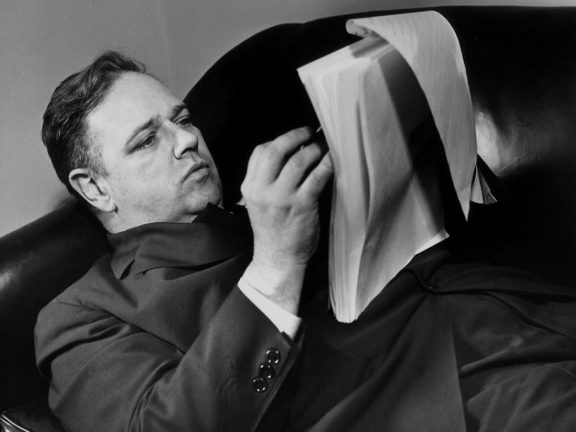
Whittaker Chambers: The Movie

For years, I have commented to as many people as I could that a movie needed to be made of the life of Whittaker Chambers. His story is one so dramatic, so significant historically, and so grounded in spiritual reality that it begs to be told.

Of course, he already has told it in his magisterial autobiography Witness. Clearly one of the seminal books of the twentieth century, it reveals the inner struggle of a man who grew up in a terrible family situation, gave himself over to the revolutionary communist faith, worked in the communist underground to undermine America’s government … then break from that faith to turn to God, where he found ultimate meaning for his life.

He then, in a real sense, gave his life to try to save America from the hidden enemy that wanted to destroy it. His “witness” to the Congress about what he knew of that underground, and the controversy over the role of Alger Hiss as one of his communist compatriots, became front-page news from 1948-1950.

Witness emerged in 1952 and raced to the top of the bestseller list. Yet so few know anything about Whittaker Chambers today.

I, however, have been so fascinated by his tale that I have a full semester course I teach on him and his wonderful book. I’ve also completed a book manuscript that will be published later this year that showcases the similarities and differences between Chambers and Ronald Reagan. The title will be The Witness and the President: Whittaker Chambers, Ronald Reagan, and the Future of Freedom. I’ll let you know when that’s available.

But the reason for this post today is that I discovered there are now seasoned professional filmmakers who are serious about chronicling Chambers’s life and his contribution to the soul of the nation. They need the financial wherewithal to make the film a reality and are seeking to find other interested individuals who can contribute to ensuring this production sees the light of day.

I urge you to visit the website that describes the vision for the film and to prayerfully consider helping with the costs of production. To view the site, just click here.

We are a largely superficial people who don’t think deeply about life and the consequences of our actions. This movie can be one important corrective to our societal malady. Please give it your support.

Chambers, Reagan, & the Spiritual Crisis

I finished another semester last Friday. The goal of my teaching is always to point students to Biblical truth; history is the vehicle. At the end of my course covering the second half of American history—after I’ve spent weeks showcasing the loss of Biblical principles in America over the last century or so—I like to close the course with a couple of quotes from those who clearly witnessed this loss and sought to reverse it.

Whittaker Chambers and Ronald Reagan are two bright lights in a sea of political manipulation and a spreading humanistic worldview. They spoke eloquently about the need to return to the basic truths.

Chambers, in his magisterial autobiography Witness, offered a combination of affirmation and warning when he wrote,

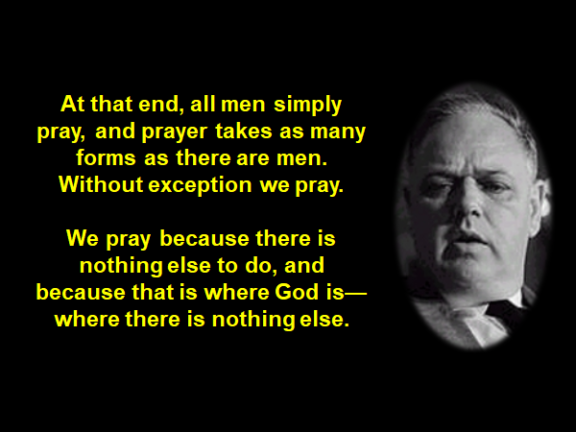
External freedom is only an aspect of interior freedom. Political freedom, as the Western world has known it, is only a political reading of the Bible. Religion and freedom are indivisible. …

There has never been a society or a nation without God. But history is cluttered with the wreckage of nations that became indifferent to God, and died.

That last sentence is a chilling perspective, but I believe it is accurate. Chambers’s clarion call was to recognize the centrality of God in society, and to realize that indifference to spiritual truth will kill any society.

Reagan was roundly criticized when he called the Soviet Union the “Evil Empire.” Yet his description was correct. He worked hard to build the American military again after it fell into political disfavor through the Vietnam tragedy, but in that so-called “Evil Empire” speech, he constantly returned to a spiritual theme, earnestly hoping that those who live in darkness might find true life in the Lord. One of his key lines was the following:

While America’s military strength is important … I’ve always maintained that the struggle now going on for the world will never be decided by bombs or rockets, by armies or military might. The real crisis we face today is a spiritual one; at root, it is a test of moral will and faith.

I like to use these quotes at the end of the course to remind students that the only path out of any manifestation of spiritual darkness is to shine the light of Biblical truth. My job is to plant the seeds; God causes the seeds to sprout and grow into viable fruit.

Chambers and Reagan also happen to be the subjects of my new book being published next year. My hope is that it too will be a seed that God can use to help turn back the tide of unbelief. We are a nation on the brink of complete disintegration if we don’t change the foundations upon which we are now building. Yet where God is, and where His people, no matter how small a remnant, stay faithful, there is always the possibility that real change can occur.

Keep the faith.

Help for Your Christmas Shopping

I know you’re Christmas shopping, so please indulge a little shameless self-promotion. Actually, I’m promoting ideas, not myself; it just happens that I wrote down the ideas, that’s all. May I interest you in a few books?

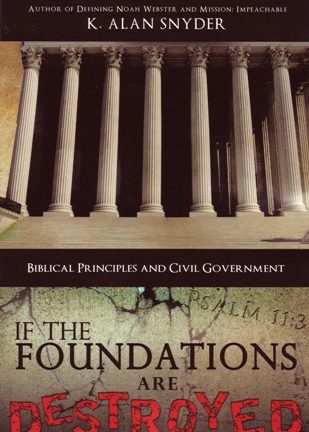
If you know someone who needs to think through how Biblical principles apply to civil government, you might consider sending them If the Foundations Are Destroyed. In it, I outline seven basic principles through which we can gain perspective on basic truths God has established. The applications are both personal and governmental. Each chapter begins with a Scriptural overview of a principle, followed by how that principle has been obeyed or ignored in history, with the resultant consequences. I don’t claim this is the final word on what those principles are, but I do believe it’s a good introduction to thinking Biblically.

If you’re more oriented toward a biography, particularly of a man who made a significant impact on early America, you might want to check out Defining Noah Webster: A Spiritual Biography. Webster earned the title of Schoolmaster to America for his famous speller, his other various textbooks, and his monumental dictionary. Key to understanding Webster is the conversion he experienced at age fifty. From that point on, everything he wrote exhibited his solid Christian faith. Even his dictionary was an instrument for advancing knowledge of God and His ways. For those of you who are involved in homeschooling, I’ll just mention that Michael Farris, founder of the Home School Legal Defense Association and Patrick Henry College, wrote the foreword to the book.

Finally, there’s Mission: Impeachable—The House Managers and the Historic Impeachment of President Clinton. Written in 2001, and a main selection in the Conservative Book Club that year, this book is the only one on the market that gives the House Managers a chance to tell their story. Why did they feel it was so important to continue to push for the removal of this man from the presidency in spite of public opinion polls that told them they should desist? What principles guided them in their quest for justice? I interviewed all thirteen of the House Managers and incorporated those interviews into the text. Each chapter focuses on a manager, providing personal background, contributions to the impeachment process, and an analysis of each one’s significance to this historic event. I’m grateful to Dr. Marvin Olasky, editor-in-chief of World magazine, for writing the foreword for Mission: Impeachable. This book is out of print, but used copies are available online, in good shape, for a very low price.

For more detail on each book, you can click on “My Books” at the top of this page. For ordering, I recommend the Barnes and Noble website, since Amazon has some confusion about the different editions.

I have another one in the works for which I just signed a contract with a publisher. It should be out by mid-2012. The title is The Witness and the President: Whittaker Chambers, Ronald Reagan, and the Future of Freedom. I’ve labored over this book for a number of years now; it comes from the heart. I’ll certainly let you know when it’s available.

Merry Christmas shopping. Hope I helped.

How I Spent My Summer Vacation

Did you ever have to write an essay when you went back to school in the fall detailing what you did during the summer? I’ve been away from the blog for a week now, so I thought I’d provide the reason: I was on my summer vacation. What did I do?

I was in the Washington, DC, area for a family reunion. Having lived just outside DC for thirteen of my adult years, I was glad to go back and see some of my favorite places again. Some things were new.

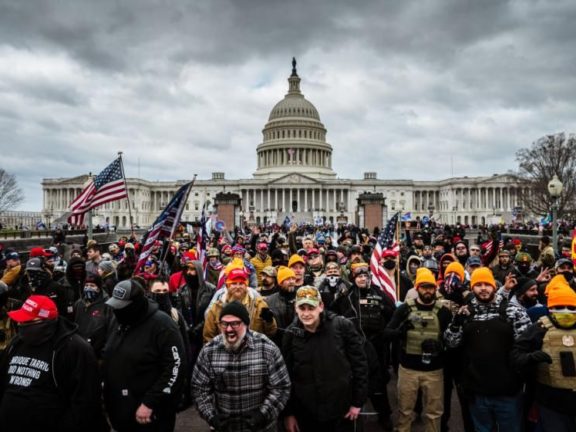
The Capitol Visitor Center hasn’t been in operation too long. Not only is it beautiful, it is a tremendous improvement for tourists. Previously, if you wanted to see the Capitol, you had to wait outside in a line, no matter what the weather. The Visitor Center is an underground facility directly connected to the Capitol, and it offers an impressive waiting area. Of course, wait you must. I had to stand in line for an hour to sit for a few minutes in the House of Representatives, but I did get to view some fine presentations by congressmen, even though one of them was Barney Frank. So, most of the presentations were fine.

One more new addition to the Capitol since I was there last was this fine statue of Ronald Reagan, located in the Rotunda. His body lay in state here back in 2004, and the memorial service was moving. He’s now a permanent fixture, as well he should be. He’s finally getting his due.

When I taught at Patrick Henry College, I used to go to the Capitol to teach on occasion, parking right on the Capitol grounds. It was a privilege to share with congressional staffers the Biblical roots of American history and government. Last week, though, I was just one tourist among thousands.

Being able to visit the Library of Congress also was a highlight. I spent many days there in the 1980s doing research. It has one of the most beautiful interiors of any building in Washington. For me, it brought back memories of finding all the original writings of Whittaker Chambers, as well as all the articles written about him back in the 1940s and 1950s. This was before the Internet, of course, so now you can find most of that online, but I still like the thrill of doing the research and handling the documents themselves.

I’ve been to Ford’s Theater many times, but not when I was teaching my own Civil War course. Now that it has become one of my specialties, visiting Ford’s this time was more meaningful. The tragedy of April 14, 1865, probably changed the course of American history for the worse. Peering into the box where Lincoln sat is sobering. Most people don’t know that John Wilkes Booth’s plot was not only to kill Lincoln but also Vice President Andrew Johnson and Secretary of State William Seward simultaneously. He almost pulled it off. The museum downstairs is excellent as well.

On the way to the airport to fly home, we had the opportunity to stop at a historic site I’d never seen before—Ft. McHenry. Even though I’d lived close to it for all those years, I’d never gone there. Yet that fort tells a significant American story. After burning Washington in 1814 during the misnamed War of 1812, the British then turned toward Baltimore. The only thing that stood between them and the burning of that city was this fort. They bombed it all night long. An American watching the bombardment anxiously waited for the morning to see if the flag at the fort still flew. He rejoiced when he saw it waving “by the dawn’s early light.” Francis Scott Key was so elated, he wrote a song. He called it “The Defense of Ft. McHenry,” but we know it now as “The Star Spangled Banner.”

Ft. McHenry has been preserved for later generations. And the flag still waves.

My vacation was short, but what matters is how much quality you can pack into a few days. While there were many other places I would have liked to revisit, they can wait for now. What I did see was well worth the time. That’s how I like to spend my summer vacation.

Faith Lessons

Faith is something I’ve had to learn over the years. By faith, I don’t necessarily mean the basic belief in Christian truth. That is solid and, I trust, enduring by this time in my life. But I’ve had to learn how to take steps of faith along the way for specific circumstances. And I’ve had to learn what faith is not.

There was a time in my life when I thought that God was at my beck and call, and would do whatever I asked. I don’t think I ever stated it that way—not so blatantly, at least. Neither do I believe I thought consciously about Him in that manner; it was more of a subconscious sensation.

He pretty much cured me of that early on, but that was just lesson number one. Many more were to follow. They continue today.

For instance, I had an idea for a book a number of years ago, and I was convinced the idea came from the One who is the source of all really good ideas. I decided to write the manuscript first and then find a publisher afterwards. One reason for that approach was my concern that I wouldn’t be able to find the time to meet any deadline that a publisher might impose. It turned out to be wise in that regard, as my life went through a major dislocation for a couple of years.

Yet I never gave up on the idea.

Last summer, as I sat down to continue work on the manuscript, I began to wonder if it would ever be completed. Was I just doing my own thing? Was this idea really from God or was I deceived? Then, one night, in the middle of the night when I couldn’t sleep, a reorganization of the rest of the manuscript practically infused my mind. I was so taken with the new organization that I had to get up and write it all down immediately. At about 3:00 a.m., I revised my book proposal and then quickly went back to sleep because my mind was now at ease.

I worked steadily and surprised myself by wrapping up the writing by early July. My first draft was complete. Now it was time to find that publisher.

Here’s where faith comes in again. It’s almost one year later and no one has committed to the idea I felt came from God. The questions begin anew: Was I foolish to do what I did? Have I spent all that time and effort for nothing? Will there ever be anyone interested in giving this proposed book a chance?

For the record, it’s about Ronald Reagan and Whittaker Chambers. Reagan was the eternal optimist, Chambers the inveterate pessimist. Both were conservative icons, but while Reagan believed freedom was the wave of the future throughout the world, Chambers instead saw mankind as too foolish and selfish to guard the freedom God gave. Which man was closer to the truth? That’s the issue I attempt to answer in this manuscript.

I still believe it’s a good premise. I believe the book can be valuable and instructive for those who take the time to read it. The nagging doubt now, though, is whether it will ever see the light of day.

I look upon this as one more faith lesson. I also am coming to grips with the possibility that it may not be published. God is peering into my heart and asking, “What is more important to you? Are you seeking personal glory or can you be content with simply being obedient to Me?” I want to affirm the latter, so I decided to do it publicly today.

Your will be done, Lord, whatever that may be. And I take seriously the Scriptural reminder: “We look not at the things which are seen, but at the things which are not seen; for the things which are seen are temporal, but the things which are not seen are eternal.”

This world will pass—and all books with it. Eternity will . . . well . . . last forever. So where should our focus be?

Worthwhile Reading

If you have been a regular reader of this blog, you can’t have escaped noticing that two of my academic interests are Ronald Reagan and Whittaker Chambers. I have worked for a number of years on a book comparing the two; the manuscript is finished now, and I’m in the process of trying to find a publisher.

That may be a backward way of writing a book, but I never knew when or if I would actually have time to complete it, so I didn’t actively seek a publisher ahead of time; I decided to wait until I was done, then trust that God would open a door. For those of you who pray, this is a formal request for any prayers you might want to offer.

The goal of the book is to compare Reagan’s sometimes overwhelming optimism concerning the future of freedom in both America and the world with Chambers’s equally dominant pessimism on that topic. I found it a fascinating study, in which I read every scrap of writing by and about Chambers that I could find; for Reagan, I not only read nearly every book available on his life and beliefs, but I took notes on every speech he made as president. It was a labor of love.

Until that book is published, if you are interested in reading some of that research, I did have portions of three chapters published in an online journal called First Principles. One covers Reagan’s stylistic debt to FDR [if not his policies], a second delves into the university education Chambers received at Columbia, where he entered a budding Christian conservative and emerged a communist, and the final one deals with the optimism-pessimism comparison. You can find those in my listing of articles—click “My Articles” either at the top of this page or in the sidebar.

Meanwhile, may I suggest another book that might whet your appetite about Chambers? I recommend Whittaker Chambers: The Spirit of a Counterrevolutionary by Richard Reinsch II. I wrote a review of the book in a journal, but it is by subscription only. Others, though, mirror my views on its value. As George Nash, the preeminent historian of conservatism, has stated,

Richard Reinsch has written an elegant and discerning study of one of the literary giants of modern conservatism. At a time when the American Right is striving to recover its intellectual bearings, the profoundly spiritual perspective of Whittaker Chambers is worth pondering anew. Reinsch’s timely volume brings Chambers’s thought into arresting focus.

So, get a copy of Mr. Reinsch’s book, then move on to mine when it finally sees the light of day. His is definitely worthwhile; we’ll have to wait a while to see if mine measures up.

Palin's America by Heart

I bought Sarah Palin’s new book, American By Heart, just before Christmas, knowing I would have time to read it before my new semester began. George Bush’s book took priority, since it was longer, so I didn’t finish Palin’s book until last weekend—an appropriate time to complete it as it coincided with the shooting in Tucson and all the accusations against Palin. The image presented by the far Left, that she is vitriolic [last week's favorite word, later followed by "civility"] and uses rhetoric that spurs people on to violence, cannot be sustained in light of what Palin herself writes. I wonder if any of those who hate her have taken the time to read what she actually has written?

Unlike her earlier autobiography, which naturally concentrated on her upbringing, her family, and her experiences as the vice-presidential candidate, this new book provides the opportunity for her to express what she really believes about government, the place of America in the world, and the significance of religious roots for the health of our society. It allows her to construct a framework, or worldview, within which to understand her positions on the issues that confront us all, whether in culture or in politics.

Palin also makes extensive use of quotes from a panoply of conservative thinkers and politicians from Alexis de Tocqueville to Calvin Coolidge to one of her favorites and mine, Ronald Reagan. I was also gratified that she recognized the value of Whittaker Chambers in our history.

Yet she doesn’t confine herself to conservatives, pulling excerpts from speeches by John F. Kennedy and others not of her political stripe—even from Barack Obama himself.

Here’s a quick rundown of the emphases of the book:

Chapter one, “We the People,” stresses the significance of the nation’s founding documents—the Declaration of Independence and the Constitution. God-given rights, as posited in the Declaration, and fidelity to the limits of government’s power, as delineated in the Constitution, are cornerstones of liberty.

She turns in chapter two to an appreciation of those who serve in the military, contrasting that appreciation with the disdain shown by Hollywood toward the armed forces, where a reflexive anti-Americanism often surfaces. She also quotes freely from John McCain’s account of his time as a prisoner of war in North Vietnam. Her respect for McCain’s service is genuine.

From the military, Palin segues into an examination of the concept of American exceptionalism. Is American exceptional? In what sense? Here is where she draws on the writings of Tocqueville to highlight what an eighteenth-century Frenchman saw when he visited this country. America is not perfect, she is clear to note, but it is exceptional in many ways. The problem is that some national leaders no longer believe in that exceptionalism.

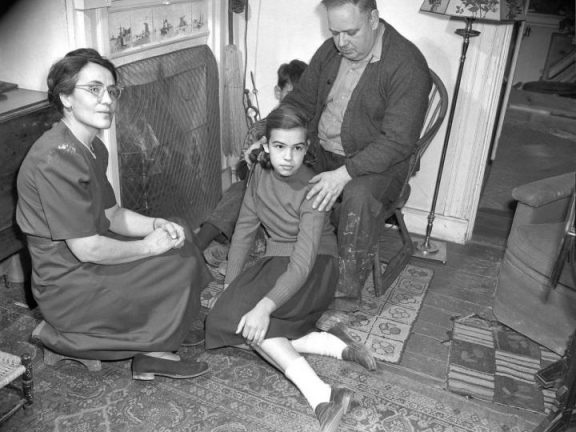
Family, parenting, and the pro-life message come next. Here’s where Chambers enters the picture as she relates his account of how meditating on the intricate design of his daughter’s ear led him to think of a Creator.

Her chapter on Mama Grizzlies contains her concept of feminism, a feminism that empowers women but doesn’t degrade men or try to erase the distinctions between the sexes. That leads into a discussion of the value of hard work, which she contrasts with the self-esteem culture that seems to dominate our society today.

In the final three chapters, Palin focuses on the importance of religious belief for all of life and the nation. Without being preachy, she nevertheless traces how religious beliefs have been the foundation for our society from the beginning. Never, though, does she imply that government should step in and force religion on anyone. In fact, she quotes former attorney general John Ashcroft saying, “It’s against my religion to impose my religion on others.”

Palin’s conclusion is entitled “Commonsense Constitutional Conservatism,” and if she does decide to run for the presidency, I believe this will be her slogan.

Do I have any criticisms of the book? Well, I don’t share her belief that 12-Step programs are part of a religious revival. In fact, I believe they do a disservice by calling something a disease that is actually a sin. I also think she could have cut back a little on some of the quotes. Of course, that comes from my academic milieu, where you don’t want to overdo the quotations. Yet those are quibbles when compared with the positive message she shares and the agreement I have with the other 99% of the book.

For those who believe Sarah Palin is a danger to America, that she is a purveyor of hatred, I challenge them to read this book. They won’t agree with her but they might see a different person than the stereotype they have adopted. If they really believe in civility, they will take this first step and not fall into a stereotype of their own:

Is that really how they wish to be perceived?