Category: The Historical Muse

Thoughts on history and the historical profession. Clio is the muse of history–this category title is a play on that concept.

The Loss of History Is Our Loss

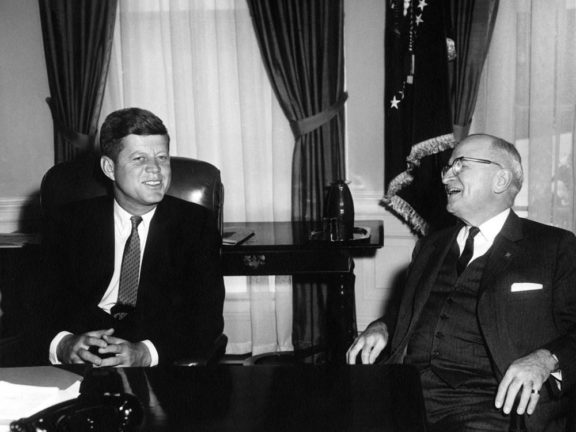
I remember it was back around 1980, when I was teaching some high school students, that I first encountered the realization that I was older and they were unbelievably young. What do I mean? I was talking about the JFK assassination and was stunned to learn that they were too young to have had firsthand knowledge of it. Of course, if I had been thinking clearly, I would have understood that ahead of time; after all, even if I’m not… Read more »

Principle Above Politics: Conscience Is Forever

Bill Clinton was acquitted of impeachment charges in February 1999. The next month, I was in Washington, DC, attending a conference on constitutional history. It included a session in the chamber of the Supreme Court. I was thrilled to be there. Years before, while earning my doctorate at American University, I had worked in the Supreme Court history office and had even sat in on one of the cases presented to the Court. The thrill, though, disappeared as I listened… Read more »

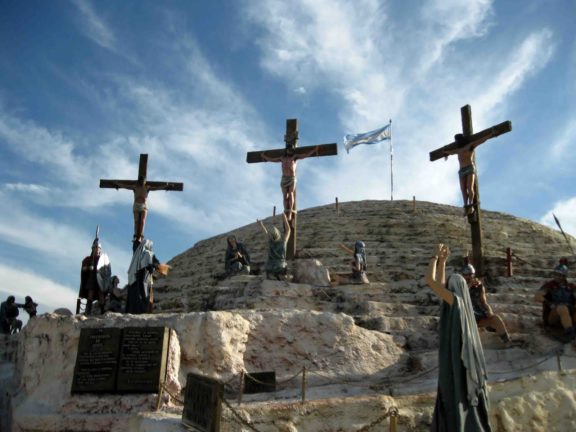
Today You Shall Be with Me in Paradise

On this Good Friday, I am speaking in the service being held in my church—All Saints’ Episcopal in Lakeland, Florida. Here is what I’m sharing. Why crucifixion? What did one have to do to receive this particularly gruesome method of execution? There were two main reasons. One was terrorism (or imputed terrorism such as speaking out against Rome)—this was what the Jewish leaders used to convince Pilate that Jesus had to be crucified; he threatened Roman rule. Even though He… Read more »

The Devolution of the Democrat Party

Democrats and Republicans have always disagreed about policy, but there was a time when the two parties weren’t as polarized as they are today. In my study of American history, the last Democrat president with whom I would have felt entirely comfortable was Grover Cleveland—and that goes a long way back. Yet Democrats weren’t always as radical as they seem to be now. The change in my lifetime has been rather dramatic, and I’m sure many others can attest to… Read more »

The Chambers Lesson: From the Negative to the Positive

I discovered Witness by Whittaker Chambers back in the 1980s as I was working diligently on my doctorate in history. From my first reading, the book took hold of my spirit. More than thirty years after that encounter, it has never released its hold. I’ve used it in classes since the late 1980s, and one of my greatest teaching joys is to offer a full-semester course called “The Witness of Whittaker Chambers.” I’m teaching the course once again this semester…. Read more »

Thoughts on Presidents’ Day

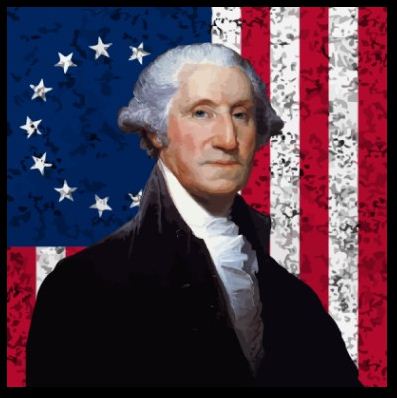
So, it’s Presidents’ Day. It didn’t used to exist. In my younger years, we had instead separate days to honor George Washington and Abraham Lincoln specifically, on their respective February birthdays. I’m not even all that sure what the current Presidents’ Day is supposed to focus on. People from my generation probably still consider it a commemoration of Washington and Lincoln, but what about the new generation? Is the intent to honor anyone and everyone who ever served as president?… Read more »

American Character: Noah Webster

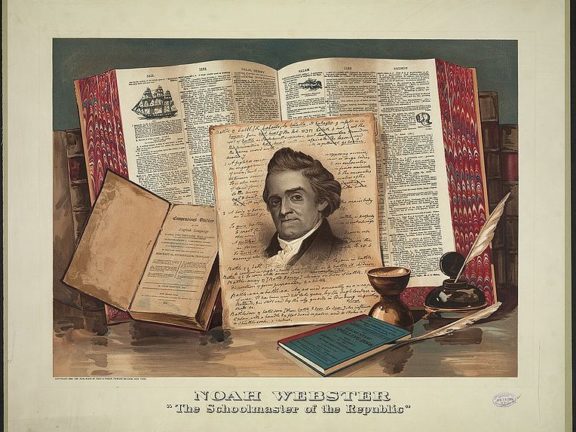
The name “Webster” sounds familiar to most people. They think for a minute and then say, “Oh, yeah, he’s the dictionary guy, right?” Right. But he’s more than that. Noah Webster is a prime example of someone who exhibits the character trait of diligence. A native of Connecticut and descendant of Pilgrim governor William Bradford, Webster was raised in the Congregational church, graduated from Yale, and even was awarded a master’s degree—unusual for the time. In 1783, he got the nation’s… Read more »