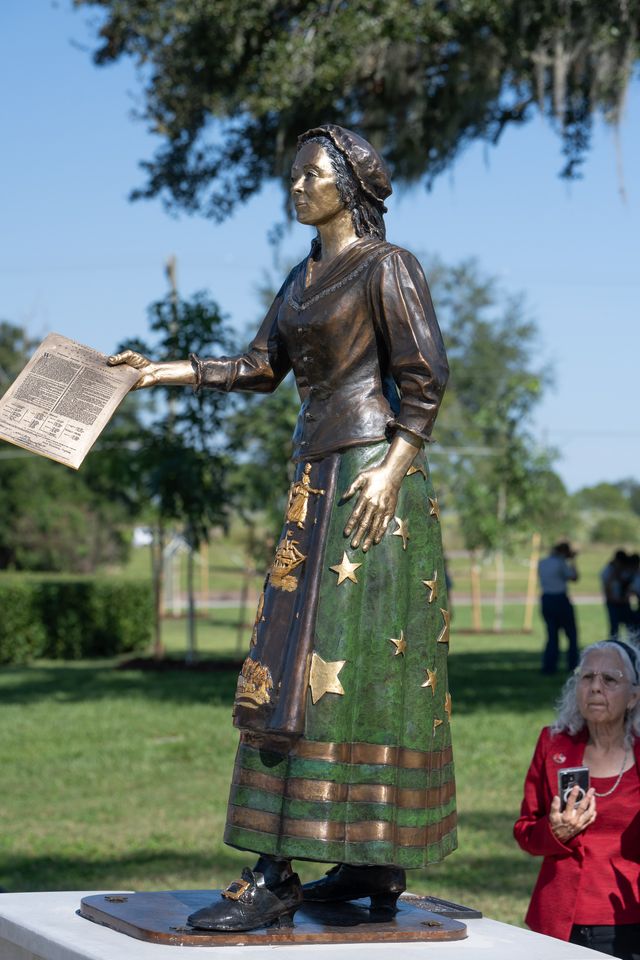
Her name was Mary Katharine Goddard. Most people have never heard of her. Prior to four years ago, before joining a committee to erect a monument to the 250th anniversary of the Declaration of Independence, I had not heard of her either. That’s particularly telling, as I have a doctorate in American history and have taught the era of the American Revolution continually over the past forty years.
And yet I had never heard of her.
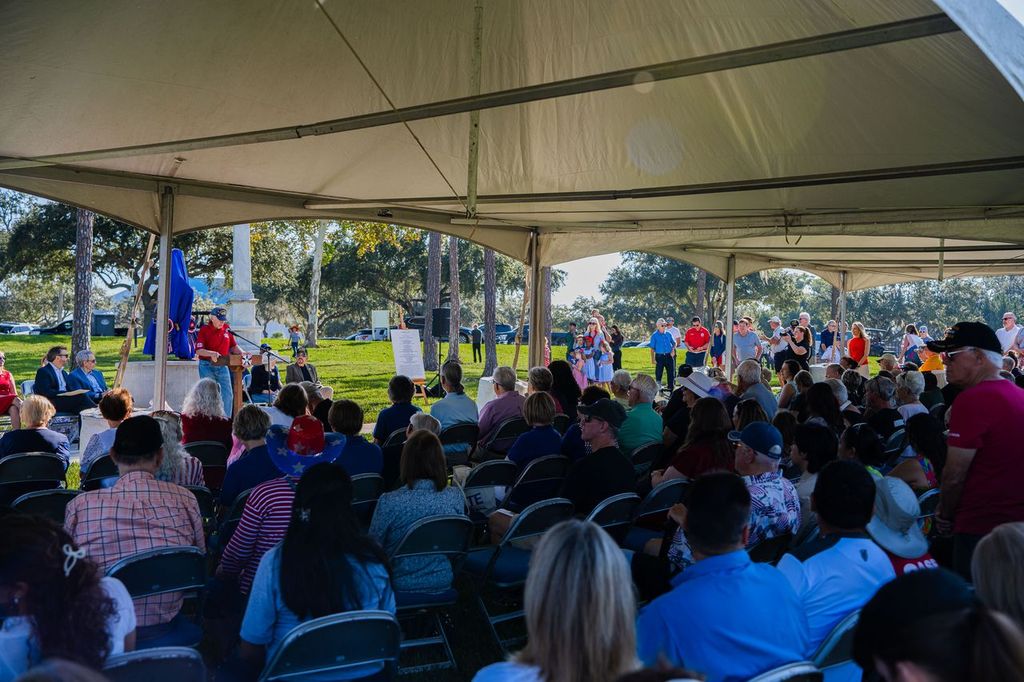
In our recent Veterans Day commemoration in my city of Lakeland, Florida, we finally gave Mary Katharine Goddard the recognition she deserves. The committee I served on for the past four years chose her as our representative of a patriot in the American Revolution. A statue of her holding the Declaration of Independence was dedicated on the 7th of November in this, the 250th year after the Declaration was adopted and America became independent.
Why did we choose Goddard for this commemoration? There certainly were more obvious choices, but did we really need another statue of Washington or Jefferson, for instance? They are celebrated throughout the nation for their contributions. We chose Goddard because we sought to highlight a patriot who contributed, as so many others did, without much public notice. We wanted a symbol of those who also played their part faithfully in the quest for independence.
I’ll come back to Goddard’s specific contribution shortly.
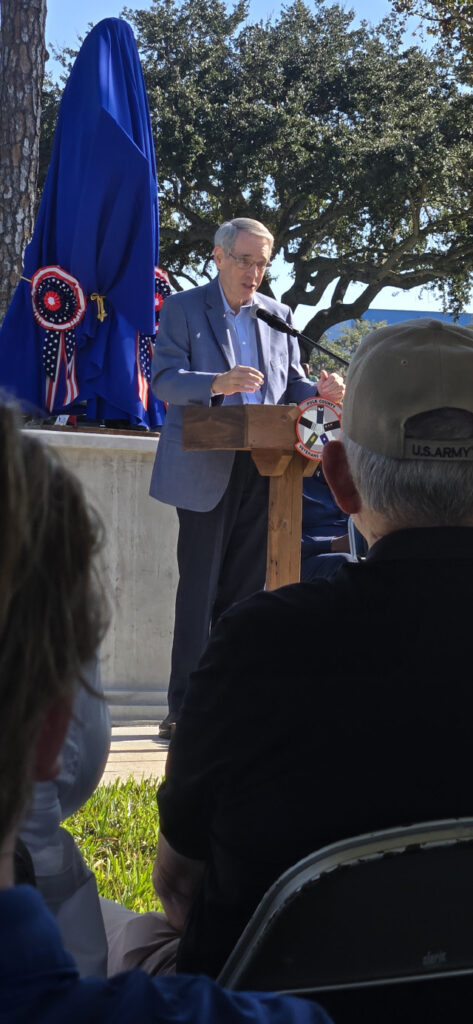
As the committee’s historian, I spoke briefly before the official unveiling of the statue. I provided a history of the years leading up to this day. The committee had held a number of public forums to promote the establishment of this statue. For three of those forums, I was the principal speaker. My goal in those forums was to explain the background for the Declaration and why it was important for future generations to set up this monument.
In the first forum, I focused on the British heritage of colonial America and why the colonists were so attached to the protections it offered: the Magna Carta, which subjected the king to God and the law; the English Bill of Rights, which made Parliament supreme over the king and formed the basis for America’s Bill of Rights in the Constitution; the charters for the colonies that promised the same rights for colonists that citizens in England had. But then I had to show how the British government violated its own heritage through a number of actions—the Stamp Act, the Declaratory Act, the Townshend Acts, the Tea Act, and the Coercive Acts. These actions alienated the colonists.
The second forum at which I spoke concentrated on the outbreak of the Revolution, the responses of the colonists, the proclamation of rebellion by King George III, the vote for independence, and the drafting and passage of the Declaration. Then, in the third forum, I laid out the specifics of the Declaration itself and the legacy it has given us.
Those preliminary forums were essential for garnering support, but we still wanted to find someone who could give even more detail on Goddard. We were blessed when we received word of a scholar who had done foundational work on her life and contributions.
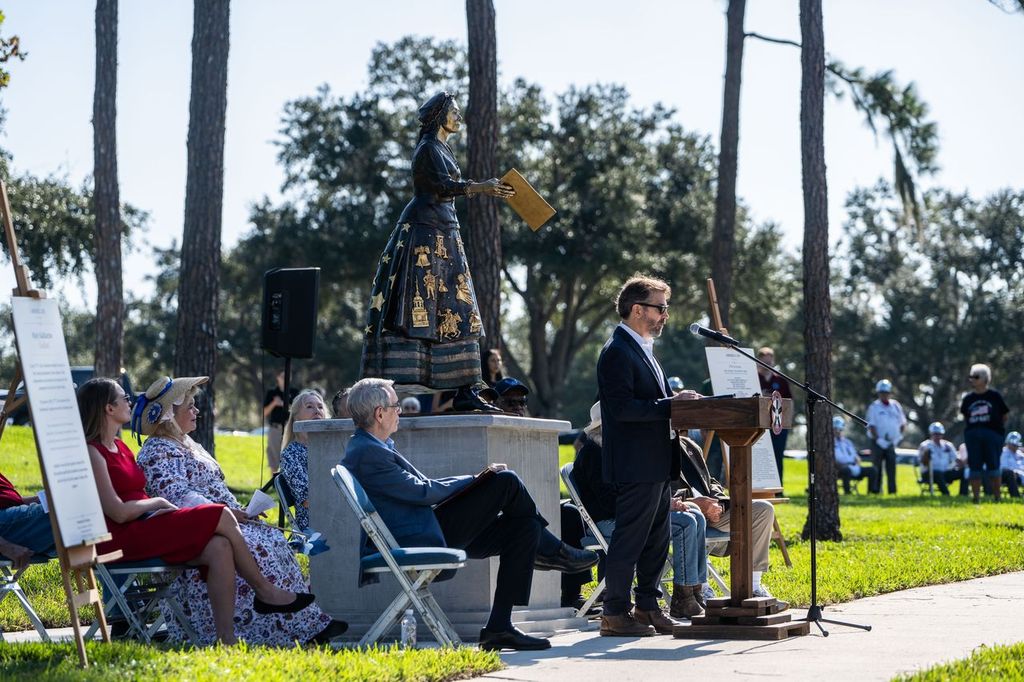
Dr. Christopher Young from Indiana University Northwest is the foremost authority on Mary Katharine Goddard. Dr. Young came to Lakeland to speak at the final forum and offered us the kind of scholarly detail that we needed to confirm that, yes, we had made a good choice with Goddard. We invited Dr. Young to return for the dedication; in the photo above, he is speaking with the newly unveiled statue behind him.
So what did Mary Katharine Goddard do?
When the Continental Congress, in 1777, wanted the Declaration printed and sent out to every state, they turned to Goddard who served as the printer for Baltimore, the city in which the Congress was meeting at that time. She was asked to undertake that task. So, for all practical purposes, Goddard was the first printer for the new United States of America, which was unusual for a woman in that era.
Her printed version of the document was the first to include the names of all the signers. Additionally, her full name appears at the bottom as the printer. She didn’t have to do that, but her patriotic values already had been established, as Dr. Young clearly noted in his talks. The final sentence of the Declaration states, “And for the support of this Declaration, with a firm reliance on the protection of Divine Providence, we mutually pledge to each other our lives, our fortunes, and our sacred honour.” By placing her name under the signers, Goddard was thereby putting her life on the line along with all those men who signed. Her life, her fortune, and her sacred honor were also in jeopardy, depending on the outcome of the war.
All Veterans Days are special, but this one had this extra special dedication attached to the commemoration. Each successive year now, this statue will serve as a reminder that the independence of our nation rests not only on the exploits of famous names; it rests on each of us going forward. Will we continue to do what’s necessary to maintain our independence? Will we continue to hold our leaders accountable to the values of the Declaration and the provisions of the Constitution? There are no guarantees. It depends on our willingness to be people of integrity who might have to sacrifice our lives, our fortunes, and our honor (in the eyes of some) to keep this nation free.