
The Challenge from Francis Asbury

I recently completed reading some of John Wesley’s journal entries and letters. I feel a kinship with him. One of his disciples was Francis Asbury, considered more than anyone else the founder of the American Methodist church, and the namesake for a Christian college in Kentucky. I’ve now begun looking at excerpts from his journal as well. His faith was dynamic, not static. He preached a personal gospel with all its social implications, speaking out against slavery, drinking, gambling, and other practices that degrade a people. But he didn’t just denounce sinful actions; he reached out to anyone who would listen to the message of redemption. He helped educate the illiterate by building schools and colleges, founded Sunday Schools, and preached to those in prison. God placed within him a desire to spread the Word to as many as possible.

As a result, he went up and down the land for 45 years, mostly on horseback, winning converts and emphasizing that his purpose was to “reform the continent and spread scriptural holiness.” He was the inspiration for the famous Methodist circuit riders who made sure the gospel could be heard in even the remotest locations. When he died, he left churches and the impress of his personality from Ontario to Georgia, from Virginia to Ohio, and upon all the states within that circuit.

His journal entries reveal a man driven to be all he could be for God. At age 26 he left his native England for the New World and never returned to the Old. Shortly after arriving, one entry declared his goal: “I have nothing to seek but the glory of God; nothing to fear but his displeasure.” He studied the Bible constantly and sought to speak with the authority of Scripture, yet never lost sight of his dependence on the Spirit. He put it this way:

It seems strange, that sometimes, after much premeditation and devotion, I cannot express my thoughts with readiness and perspicuity; whereas at other times, proper sentences of Scripture and apt expressions occur without care or much thought. Surely this is of the Lord, to convince us that it is not by power or might, but by his Spirit the work must be done. Nevertheless, it is doubtless our duty to give ourselves to prayer and meditation, at the same time depending entirely on the grace of God, as if we had made no preparation.

Asbury also kept a close watch on his heart, wanting to ensure that he never grew cold in his faith:

My mind has been much perplexed about wandering thoughts in prayer, though Mr. Wesley’s deep and judicious discourse on that subject has afforded me no small satisfaction. He hath both shown the causes of those thoughts, which are not sinful, and incontestably proves that they contract no guilt. Yet a devout and tender mind must be grieved to find any kind of temptation in that sublime exercise wherein the whole soul desires to be employed.

As a historian, I’m naturally interested in accounts of men like Asbury; as a Christian, I’m drawn to his thoughts and his heart. The two merge nicely. Further, I want and need to be challenged with respect to my own walk. Do I seek nothing but God’s glory? Am I studying His Word sufficiently yet simultaneously dependent on His Spirit to lead me? Will my heart and mind stay tender toward the One who gave me a second chance in life?

Thank you, Francis Asbury, for making me think on these things.

Misperceptions of Holiness

There’s a perception of some evangelicals, particularly in the media and on the “progressive” side of politics, that they are rigid, unfeeling, unthinking, mean-spirited joy-killers. Anyone who speaks out against licentious behavior and calls abortion and homosexuality sins are akin, in some minds, to those who championed the Inquisition during the Middle Ages or those Puritans who refused to celebrate Christmas [without, of course, studying to find out the reason they opposed the celebration---the way it was carried out in England was far from Christ-honoring at the time].

The word “holiness” has gone out of style, even among many evangelicals. Some holiness denominations have contributed to a misunderstanding of the Biblical concept. They have concentrated on what one doesn’t do rather than the positive, joyful obedience to God’s standards that emanates from a heart of love.

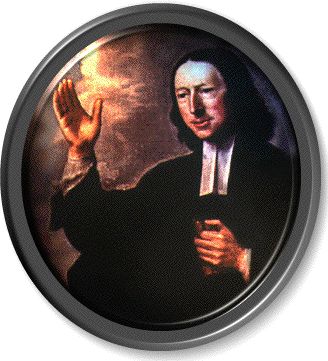
One of the early proponents of a doctrine of holiness was John Wesley, who started the Methodist movement within the Church of England back in the eighteenth century. I’ve been doing a little reading of excerpts from Wesley’s journal. One of those excerpts captures, I think, the essence of Biblical holiness and the joyful life that God wants for everyone. Read Wesley’s commentary here, and if you are one of those individuals with a skewed view of holiness, this might provide a corrective:

I am convinced as true religion or holiness cannot be without cheerfulness, so steady cheerfulness, on the other hand, cannot be without holiness or true religion. And I am equally convinced that true religion has nothing sour, austere, unsociable, unfriendly in it; but, on the contrary, implies the most winning sweetness, the most amiable softness and gentleness.

Are you for having as much cheerfulness as you can? So am I. Do you endeavour to keep alive your taste for all the truly innocent pleasures of life? So do I likewise. Do you refuse no pleasure but what is a hindrance to some greater good, or has a tendency to some evil? It is my very rule; and I know no other by which a sincere reasonable Christian can be guided.

In particular,  I pursue this rule in eating, which I seldom do without much pleasure. And this I know is the will of God concerning me; that I should enjoy every pleasure that leads to my taking pleasure in Him; and in such a measure as most leads to it.

When Christians call for a higher moral standard for America, it’s not because they want to destroy pleasure. What we witness in our culture are all the false pleasures that try to substitute for the real pleasures God would like to provide. True pleasure is never found by following our own selfish desires. It exists only in a relationship with the One who created pleasure. When we lay aside our selfishness and rebellion against His reasonable commands, only then do we come to an understanding of pleasure because only then will we see it as coming straight from the heart of God.

So I don’t apologize for speaking out on the issues of abortion, homosexuality, personal responsibility, political chicanery, or media malfeasance, among others. My desire is to help bring our society closer to the heart of God, which ultimately brings His blessing and every true pleasure.