
Being Faithful unto Death

Yousef Nadarkhani lives under a sentence of death. Iran plans to execute him for the crime of being a Christian pastor. It all  began in 2009 when Nadarkhani objected to his children being indoctrinated into Islam in the school they were required to attend. He was standing for parental rights as well as the Christian faith.

His outspoken views led to his arrest and the eventual death penalty sentence. This has created a furor in what could be called the remnant of the civilized world. In a rare moment of moral clarity, even the Obama administration has spoken against this unjust sentence. Republicans and Democrats alike unite in admonishing the Iranian regime and calling for Nadarkhani’s release.

Iran is under some pressure, therefore, to review the case. At one point this past week, his lawyer believed there was a 95% chance that the verdict would be overturned. Then, amazingly, the Iranian government changed its tactics—no, Nadarkhani was not being sentenced to death for being a Christian; rather, it was because he had raped someone and even ran a brothel.

That one doesn’t survive the laugh test. It is so transparently false that no one is buying it. These false accusations are reminiscent of the Stalin Show Trials of the 1930s or how Hitler got rid of his enemies: concoct a fantastic story without a shred of evidence and use it to advance the goals of the regime.

What’s going to happen to Pastor Nadarkhani? No one knows for sure yet, but it doesn’t look hopeful. In the midst of this, though, one thing is crystal clear—this man is a model of Christian steadfastness and devotion to the One who saved him from sin. His refusal to deny his Savior is a testimony to the life-changing power of the Holy Spirit. His life—and perhaps his death—will serve as a sobering reminder to Western Christians that we are not simply playing a religious game. We are eternal beings with either heaven or hell awaiting us, and we must answer the call to be faithful, even unto death.

Think of Yousef Nadarkhani; pray for him and for his family. Let his life be an inspiration to those of us who claim the name of Christ.

Romans 8:31-39

If God is for us, who is against us? He who did not spare His own Son, but delivered Him over for us all, how will He not also with Him freely give us all things?

Who will bring a charge against God’s elect? God is the one who justifies; who is the one who condemns? Christ Jesus is He who died, yes, rather who was raised, who is at the right hand of God, who also intercedes for us.

Who will separate us from the love of Christ? Will tribulation, or distress, or persecution, or famine, of nakedness, or peril, or sword? Just as it is written, “For Your sake we are being put to death all day long; we were considered as sheep to be slaughtered.”

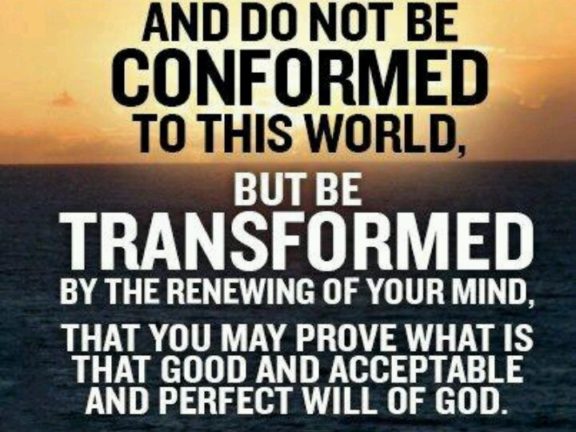
But in all these things we overwhelmingly conquer through Him who loved us. For I am convinced that neither death, nor life, nor angels, nor principalities, nor things present, nor things to come, nor powers, nor height, nor depth, nor any other created thing, will be able to separate us from the love of God, which is in Christ Jesus our Lord.

The Double Standard: Get Used to It

Herman Cain has been a speaker at Tea Party rallies across the country. You would think that would put to rest the idea that the Tea Party is a racist organization.  But here comes actress Janeane Garofalo, who refuses to bow to the obvious. Instead, she insists,

Herman Cain is probably well liked by some of the Republicans because it hides the racist elements of the Republican Party. Conservative movement and tea party movement, one and the same.

People like Karl Rove like to keep the racism very covert. And so Herman Cain provides this great opportunity so you can say, “Look, this is not a racist, anti-immigrant, anti-female, anti-gay movement. Look, we have a black man.

There’s really not much hope for changing some people’s minds. Their minds are made up; they would rather not be confused by the facts. Ever since the Tucson shooting last January, we’ve been treated to the most mind-boggling exercise in double standards I’ve ever witnessed, at least in the realm of “civil conversation.” The mainstream media hasn’t helped.

We might as well get used to it. It’s not going to change.

Sure, Why Not Another Terrorist State?

I’ve been concentrating on electoral politics lately. There have been other stories that deserve attention as well. One of those is the Palestinian effort to be recognized as a legitimate nation at the U.N. This comes to the forefront of what the media has dubbed the “Arab Spring.” The narrative goes something like this: despotic rulers are being displaced by freedom-loving moderates throughout the Arab world, so we should rejoice over this encouraging development.

Unfortunately, I believe this is closer to the reality:

Those freedom-loving crowds are the same ones attacking the Israeli embassy in Egypt and calling for death for all non-Muslims. The centerpiece of this Middle Eastern religious and cultural clash is the promotion of a Palestinian state. That’s why Palestinian President Mahmoud Abbas made his trek to the U.N. last week to press for statehood. He gave a speech to the General Assembly, arguing the merits of this move:

The problem is that both factions of Palestinians—the Palestine Liberation Organization [PLO] and Hamas—have, as their philosophical foundation, the destruction of the nation of Israel. The most fanatical of them seek to kill all Jews. Of course, Abbas didn’t say any such thing in his address, but the undercurrent is present nevertheless.

No, he didn’t wear the t-shirt, but that doesn’t negate the underlying premise.

The Obama administration’s response, so far, has been in line with American policy in all the decades since Israel’s birth in 1948. We’re told we will continue to stand with Israel by vetoing, in the Security Council, any attempt to recognize a Palestinian state. But please forgive me if I still have some concerns about that. We have a president who is so sympathetic to the Palestinian cause—remember his “church” back in Chicago that put statements from Hamas in its Sunday bulletins?—that I’m not sure he will remain steadfast with that veto.

The only real hope that he will keep his word is that he needs the Jewish vote again in 2012.

An Increasingly Fascinating Election Season

Politics can be full of surprises. Just when you think everything is set in granite, and when the pundits believe they’ve got it all scoped out, their worlds can be rocked:

Last week, who really expected that Rick Perry would turn in such an awful debate performance?

And the biggest shock of all?

Looks like the frontrunners drew some rather short straws.

Meanwhile, on the other side of the political spectrum, President Obama is trying to shore up what used to be his base of support. One group, in particular, has been shoved to one side during his tenure. Now he needs to win them back. But why would they want to come back, given the policies he has followed in the Middle East?

He’s also doing all he can to broaden his base:

But if the latest public opinion polls are accurate, he may be losing even more support—in a place he never expected to lose it:

This election season is becoming more fascinating every week.

What about Ron Paul?

Today’s topic is the result of a request by a couple of Facebook friends. They want to know my views on Ron Paul. I will be as direct, succinct, and courteous as I can. I have no desire to “bash” anyone on the Republican side, but I will state my disagreements.

First, the positive: Ron Paul is a devoted constitutionalist. That, by itself, deserves praise. He seeks to get back to the Founders’ original intent for the government, and is keen to get rid of all the superfluities that have attached themselves to it over the decades, particularly since the New Deal. When he calls for holding to the authority granted to the federal government by the Constitution and not allowing it to cross that line, I am in complete agreement with him. I may not always agree, though, on where that line is.

Overall, my biggest problem with Paul’s concepts is that he is a thoroughgoing libertarian. Libertarianism—as an “ism”—is not based on Biblical principles. There’s a big difference between Biblical liberty, which is always coupled with responsibility, and unfettered libertarianism as practiced by some. True libertarians rarely see any real need for government beyond punishing one person for hurting another person. They certainly don’t claim that government is a good thing established by God; rather, they view it as a necessary evil. But there’s a difference between the idea of government being evil and those using a God-ordained government for evil. As much as I want limited government, I nevertheless recognize the need for a strong government in those areas where God has granted it authority.

I believe laws can be passed to set a moral standard for society; a true libertarian, like Paul, doesn’t think government has any role in determining a societal standard. However, even the staunchest libertarian has no problem with saying murder is wrong and should be punished by government. Isn’t murder a moral standard? Yes, there is a line where government should not enter [no government should ever pass "hate crime" bills, which punish people for what they think or believe], but it is perfectly permissible to say that homosexual marriage should not  be recognized as legitimate by law. Abortion, the taking of an innocent life, also should be banned.

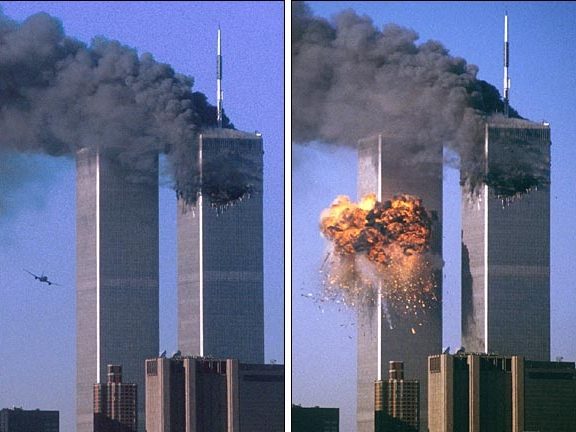
Libertarians also want the U.S. to rarely get involved in other countries. I agree that we can’t poke our noses into everyone’s business, but there are times when what is happening overseas has a direct impact upon our national security. For instance, going to war against the Taliban was entirely appropriate. They were the engine that drove 9/11.

There’s where Paul veers into strange territory. He is more apt to blame the U.S. for the events of 9/11 than the perpetrators. He’s keen on critiquing our Middle East policy but has trouble seeing fanatical murderers for what they are. Whatever mistakes we might have made in the Middle East, they pale in comparison to the hatred that emanates from radical Islam. Does he really understand that? I don’t think so.

Then there was that odd comment about his opposition to a fence on the Mexican border. He seems to think the gravest danger there is to U.S. citizens who might want to flee their own country, but that fence might keep them in. It’s as if he believes we’re living in a nation in a similar situation to the former East Germany, where the Berlin Wall kept people on the communist side from escaping into free West Berlin. The proposed border fence with Mexico does not in any way resemble the Berlin Wall. The picture of thousands of American seeking refuge in Mexico is more than a little ludicrous.

So, I don’t support a Paul candidacy. I don’t trust that he will defend this nation from all enemies, foreign or domestic. What I fear the most is the possibility of Paul running a third-party candidacy, thereby allowing Barack Obama to win a second term. I’ve heard some Paul supporters say that is preferable to a lukewarm Republican. Again, I disagree. Even a lukewarm Republican will make some correct decisions [and a strong Republican Congress can help there]. Obama will never make a correct decision. For me, there is no comparison.

You asked. I answered. For what it’s worth.

Is Cain for Real?

This wasn’t supposed to happen. The Drudge Report called it a “shocker.” Rick Perry, not Herman Cain, was slated to win that Florida straw poll. That, of course, was prior to the infamous Perry meltdown in Thursday night’s debate. It was before Herman Cain could be found speaking to any and all who attended the straw poll, delivering speeches that brought crowds to their feet in delight. Perry’s expected win pre-dated the activities of The Hermanator [Cain's own tongue-in-cheek name for himself].

I freely admit my views on Cain have evolved matured in the past week. I reported in this blog last Thursday that I had had the opportunity to sit next to Cain at a Republican club meeting. Prior to that meeting, I perceived him as a good Christian man who probably was out of his depth trying to win the presidency, primarily because he had no previous political experience. His whole manner that evening, as well as the conviction that permeated his speaking, altered that view to the point where I wished he could be more than an also-ran.

At that meeting, Cain had copies of his autobiography, which is due to be released to the general public in the next week or two. I bought one, figuring I would read it sometime, probably after Cain’s star had eclipsed—sort of as a historical footnote. At least he had autographed it, and it would be a keepsake.

Then came the debate. Not only did Perry collapse, but Cain captured the attention of the audience with his personal story and his ability to relate it to the awful truth about Obamacare. I also noted that Bachmann had done nothing to raise her prospects in that debate, so I began to wonder if Cain could actually win the straw poll, particularly since Romney had decided to skip participating in it. So I was not completely surprised when Cain won, but I must admit I was taken aback by the strength of the victory—twice as many votes as Perry and Romney combined.

There may have been some political chicanery involved; reports have surfaced that some Romney people were urging their supporters to vote for Cain as a way of destroying Perry. Yes, some of that might have occurred. But that can’t explain the totality of the Cain victory. He truly energized the crowds whenever he spoke. Straw polls are not the equivalent of primaries, but they do give an indication of the hearts of a party’s key activists. They are not insignificant, particularly this one, which brought delegates from all over the state to get the measure of the candidates.

His victory led me yesterday to pick up his book sooner than I had expected. I decided it was time to get the full story. It’s not a difficult read; most campaign biographies are not. Yet just because it was easy to read doesn’t mean it had no substance. I was quite impressed with the Cain narrative, particularly how he moved from one job to another, always seeking a new challenge. In one instance, he resigned a vice-president’s position with Pillsbury to become a Burger King trainee for management. No one could fathom why he would do that. To him, though, it was the next step in learning how to take responsibility and mastering another level of management.

Later, he turned around Godfather’s Pizza, not only making it profitable again, but in the process buying the company himself when Pillsbury decided to sell it. That was a tremendous financial risk for Cain, but now he was his own CEO. The entire story of his life reveals a man who never backs down from a challenge, and who believes God leads him step by step. Yet one doesn’t get the sense that he is bragging; he knows to Whom he owes everything.

As with all Republican candidates, he invokes the memory of Ronald Reagan. Yet with Cain, it doesn’t come across as a deliberate attempt to capitalize on Republican nostalgia so much as a heartfelt appreciation for what Reagan offered. There are also similarities between the two men. Both came through near-death experiences with one thing on their minds: the realization that whatever time they had left was to be God’s time, to do His bidding, whatever that might be.

The other obvious similarity is the way the media [and some politicos] treat[ed] their candidacies. Reagan, despite being a two-term governor of the largest state in the Union, was referred to repeatedly as a grade-B movie actor, a joke, a nonentity. He surely couldn’t win the nomination, but even if, by some miracle, he did, he would be trounced in a general election by the sitting president. Remember him? Jimmy Carter? The most incompetent president of the twentieth century? How did that turn out?

By the same token, Cain is viewed as someone incapable of winning the nomination. He’s just a second-tier candidate with no political experience, a really good speaker, but someone who, given an even greater miracle than Reagan’s, will be smashed by the sitting president. Really? By Barack Obama, the most incompetent and ideologically bound president of the twenty-first century? A successful businessman who knows how to create jobs vs. a socialist who destroys jobs? A man who will break the hold Obama has on the black electorate while sustaining the support of conservatives and appealing to independents? Why does that make him unelectable?

Cain knows he has an uphill climb to convince people that his candidacy is viable. At the end of his book, he addresses that in a section called “My Candidacy, Against the Odds”:

Some mainstream Republican pundits and, more interestingly, Democratic operatives, have criticized my candidacy. The pundits have attacked my lack of political office-holding experience, dismissing me as a radio talk show host who offers entertainment. The Democrats attack me because in their view, and rightly so, I am Barack Obama’s worst nightmare! To anyone attempting to scout my “weaknesses,” I list three more.

  1. I don’t claim to know everything;
  2. I don’t pander to groups;
  3. I am terrible at political correctness.

Like any candidate or, for that matter, the sitting president, I will make some gaffes and occasionally stumble in interviews with the press. On the other hand, my strengths include: identifying, framing, and solving problems; surrounding myself with good and great people; and giving inspirational speeches to engage the American people in my common sense solutions process.

He concludes the book with these words:

I realize that the road to the nomination and the White House is long and difficult. I know that we will encounter many new challenges along the way. When one recognizes that I am up against the skeptics, the critics, the establishment, the Democrats, the liberals, including a liberal-leaning mainstream media, the need to raise significant funds, and a host of other candidates seeking the same objectives, my candidacy seems to go against the odds.

But then, that’s been the story of my life and career. Maybe my middle name should have been David. He defeated a giant against the odds.

When Cain’s book becomes available in October, you may want to read it. It provides insight into a man who is intelligent, successful, and full of faith in the One who has guided his life thus far.